
Resources
Access our publications and resourcesSearch
Publication
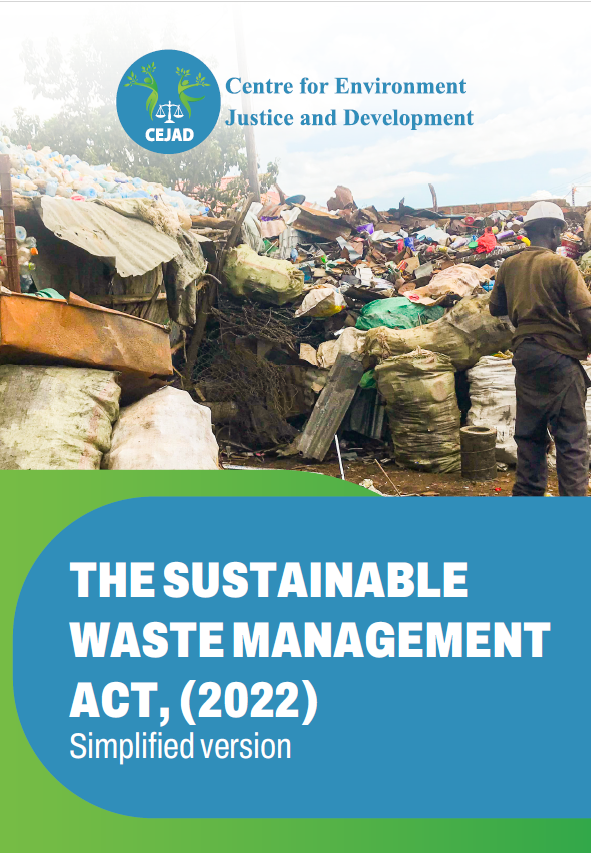
Sustainable Waste Management Act, 2022 -Simplified Version
The Simplified Sustainable Waste Management Act, 2022, provides an easy-to-understand overview of Kenya’s legal framework for sustainable waste management. It covers the main principles, duties, and actions needed to ensure proper waste handling and safeguard the environment.
Read more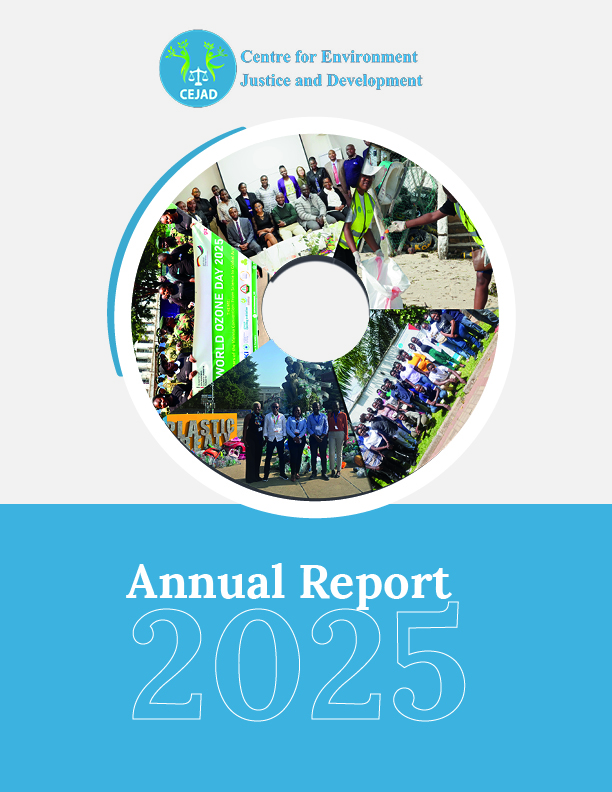
Report
CEJAD 2025 Annual Report
Read the CEJAD 2025 Annual Report, which highlights our progress in promoting responsible management of chemicals and waste to safeguard the environment and human health. The report presents key achievements, partnerships, and advocacy efforts undertaken in 2025 to foster a safer and more sustainable future.
Read more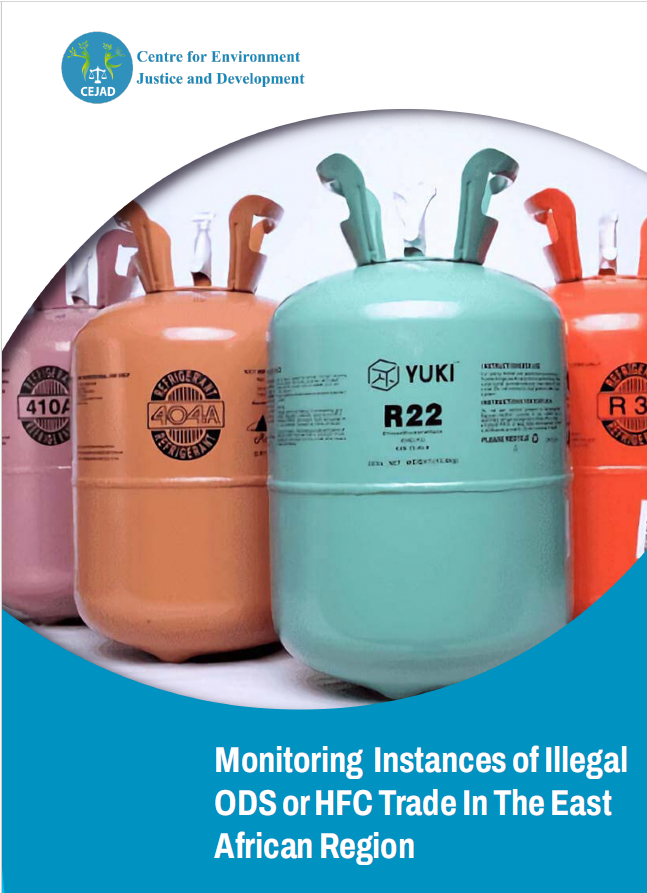
Report
Monitoring Instances of Illegal ODS or HFC Trade In The East African Region
The ozone layer shields Earth from harmful UV radiation, prompting the 1987 Montreal Protocol to cut CFCs and HCFCs. While the protocol has lessened depletion, illegal trade persists, mainly for refrigeration and AC servicing. The report reviews policies, enforcement issues, and cases in Kenya, Rwanda, Uganda, Tanzania, and South Sudan, recommending stricter controls.
Read more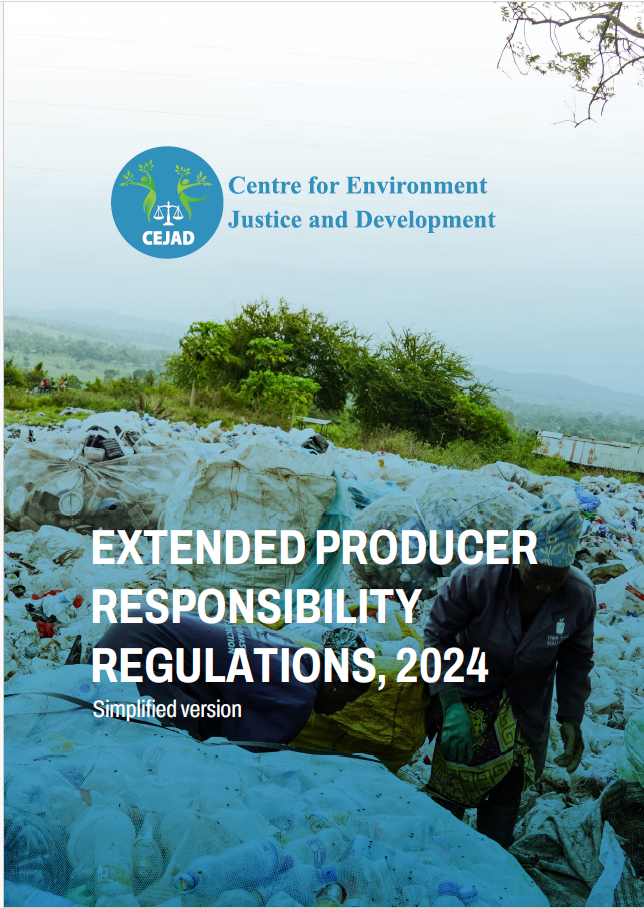
Publication
Extended Producer Responsibility Regulation, 2024- Simplified version
This publication provides a simplified overview of Kenya’s Extended Producer Responsibility (EPR) Regulations, 2024. It details the obligations for producers and importers, outlines the registration process and fee structure, and explains the function of Producer Responsibility Organisations (PROs) within the new legal framework
Read more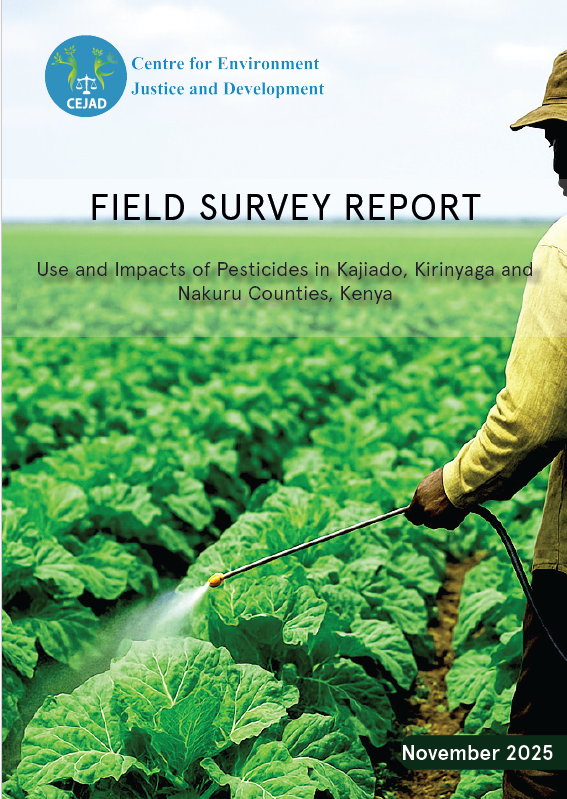
Report
Use and Impacts of Pesticides in Kajiado, Kirinyaga and Nakuru Counties, Kenya
This report presents key findings from a field survey on pesticide use and its impacts in Kajiado, Kirinyaga, and Nakuru counties in Kenya. It highlights widespread use of highly hazardous pesticides (HHPs), poor handling practices, and reported health and environmental effects among farmers and farm workers.
Read more
Policy Brief
Maintaining Africa’s Position on Sustainable Production & Consumption -Amcen19/2
Africa did not cause the plastic crisis, but through reduced production, global accountability, and sustainable consumption, it can help end it
Read more