
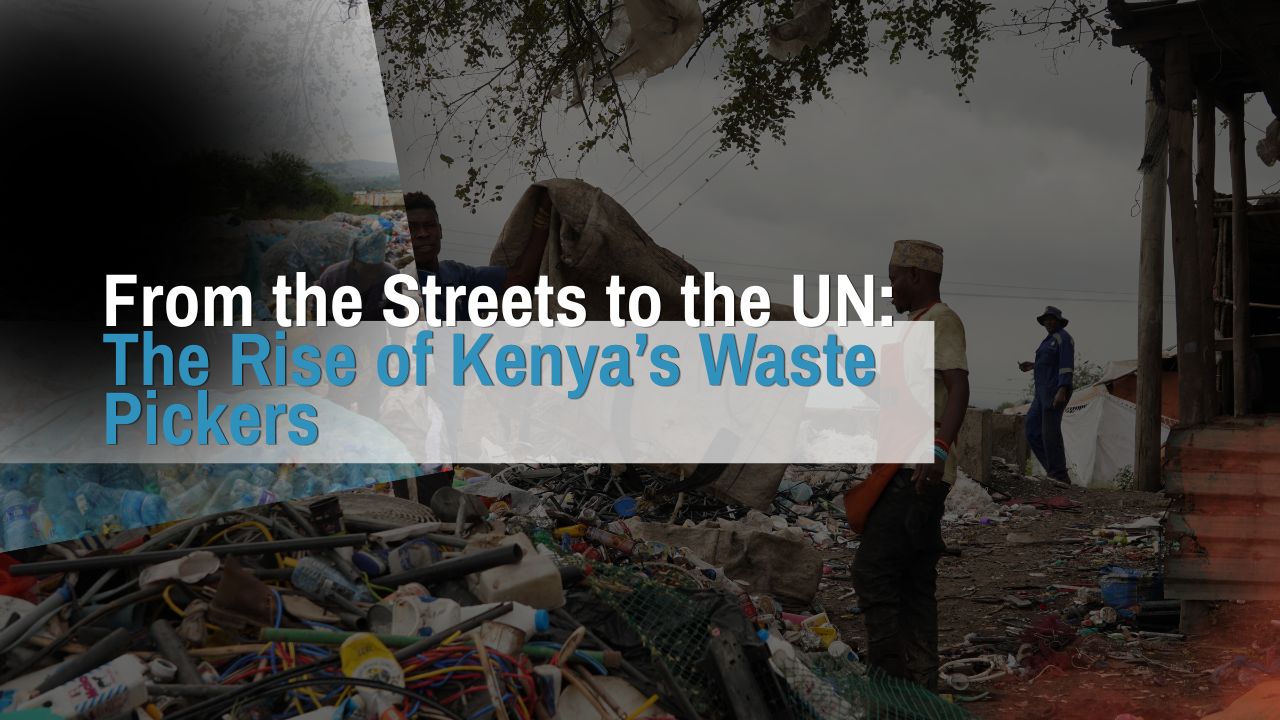
In collaboration with the Global Alliance for Incinerator Alternatives (GAIA) and with support from the SAGE Fund, we have officially released our new documentary, From the Streets to the UN: The Rise of Kenya's Waste Pickers.
The documentary, which premiered on 5 May 2026 during the Sustainable Solid Waste Management and Local Democracy Conference, is now available on YouTube.
More than a documentary, From the Streets to the UN is a powerful account of resilience, collective action and environmental justice. It tells the story of waste pickers who, despite years of working under difficult and often hazardous conditions, have organised, strengthened their movements and claimed their rightful place in national, regional and global conversations on waste governance.
For decades, waste pickers have played an indispensable role in recovering recyclable materials, reducing the volume of waste sent to dumpsites and supporting the circular economy. Yet their work has frequently remained invisible, undervalued and excluded from formal waste management systems and policy processes.
Through firsthand testimonies and compelling storytelling, the documentary captures both the challenges and the achievements of waste pickers as they advocate for recognition, dignified livelihoods and meaningful participation in decision-making. It also highlights CEJAD's role, alongside its partners, in supporting waste picker mobilisation, organisation, and formalisation efforts that have contributed to strengthening their voice and influence.
The documentary demonstrates that achieving sustainable and inclusive waste management requires placing waste pickers at the centre of the conversation. Their knowledge, experience and daily contributions are essential to building zero waste systems and advancing a just transition.
As countries implement policies to address growing waste challenges, the film serves as both an advocacy resource and a reminder that environmental solutions must be people-centred. It calls for greater recognition of waste pickers as key actors in the waste management sector and underscores the importance of integrating their perspectives into policy and practice.
Featured VideoComment(s)
Inspirational. But the heart…
Inspirational. But the heart of the matter is single use plastic needs to be drastically reduced.